When a parent or older relative gets new dentures, a few changes at home make the first weeks easier: a cleaning spot over a sink of water or a folded towel so a dropped denture does not break, a covered pot of water by the bed for overnight storage, a soft brush and denture cleaner kept apart from the family toothpaste, and softer meals in the kitchen while they adjust. The NHS says getting used to dentures can take several weeks.
Dentures are a small object, but they come with a daily routine that touches the bathroom, the bedroom and the kitchen. For an older person who is also managing stiff hands, poorer eyesight or a new set of habits, where things are kept can decide whether that routine feels easy or awkward. Families often find themselves rearranging a shelf or two without quite planning it.
This guide is about getting that set-up right from the start, whether your relative lives with you or you are helping in their own home. If the dentures are still being planned, a practice such as Cliftonville Dental on The Avenue, Northampton can explain the options and aftercare, and the home changes below will help that advice stick.
What does the daily denture routine involve?
Before moving any furniture, it helps to know the routine you are designing around. NHS advice for denture wearers includes:
- each morning and evening, brushing the gums, tongue and any remaining natural teeth with fluoride toothpaste;
- each morning and evening, taking the dentures out and cleaning them with soft soap or washing-up liquid, not toothpaste, which could damage them;
- rinsing the dentures in cold water after meals to remove loose food;
- taking them out every night and storing them in water, an overnight cleaning solution, a denture bath or a polythene bag with damp cotton wool.
The NHS advises against wearing dentures overnight unless a dentist has recommended it, because trapped food raises the risk of gum infection and decay and there is a choking risk during sleep. That makes the bedside part of the set-up as important as the bathroom.
How do you set up a safe cleaning spot in the bathroom?
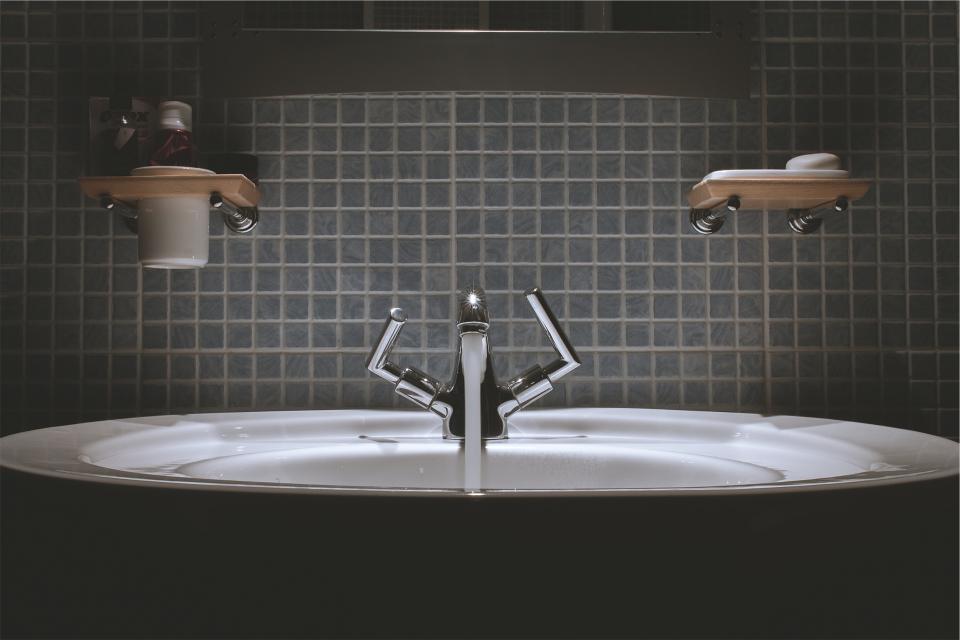
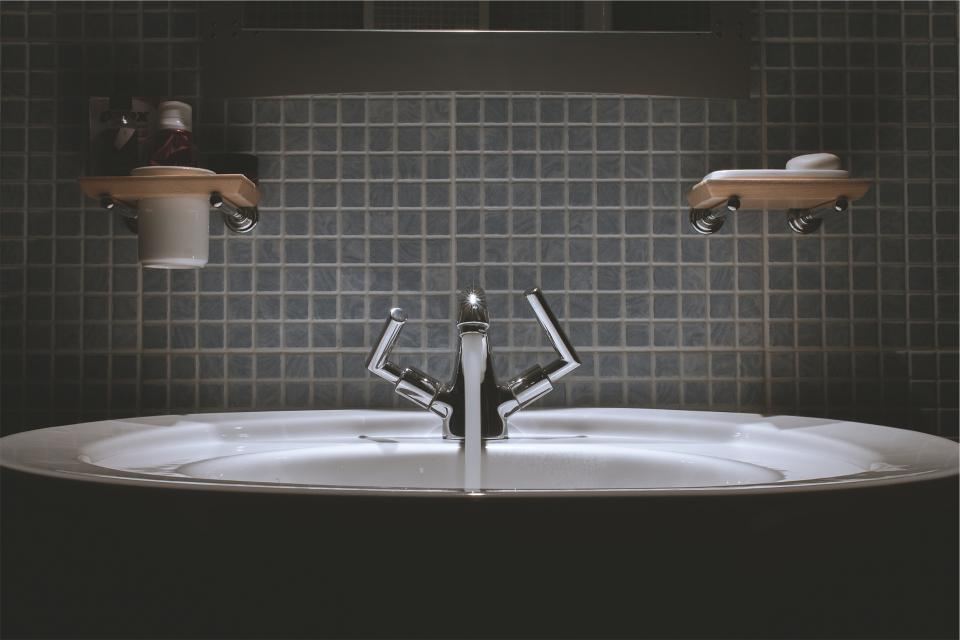
The NHS says dentures can break if dropped, and suggests cleaning them over a sink of water or on something soft such as a towel. A basin is a hard landing spot, so a few simple changes help:
- Keep a folded hand towel by the basin just for denture cleaning, so there is always a soft surface to work over.
- Use the plug. Partly filling the basin with water before cleaning gives a cushion if the denture slips, and stops it going near the plughole.
- Add a stool or perching seat if standing at the basin is tiring. Cleaning seated, lower down, also reduces the drop height.
- Light the basin well. Front-facing light at the mirror makes it easier to see food left on the denture and check gums for redness.
- Choose easy taps. Lever taps are simpler than stiff cross-head taps for hands with arthritis.
Where should denture products be stored?
Denture care products are different from the rest of the family's dental kit, and mixing them up is easy. Give them their own place.
| Item | Where to keep it | Why |
|---|---|---|
| Soft denture brush | Upright in its own holder by the basin | Separate from toothbrushes and easy to spot |
| Soft soap or denture cleaner | A labelled caddy next to the brush | Stops anyone reaching for toothpaste by mistake |
| Fluoride toothpaste | With the person's own toothbrush | Still needed for gums, tongue and natural teeth |
| Overnight soaking pot | On the bedside table, with a lid | Dentures go straight in at bedtime without a trip to the bathroom |
| Overnight cleaning tablets or solution | A high or closed cupboard | Keep away from children and pets |
If grandchildren visit, a lidded pot is also a sensible precaution. Dentures left in an open glass are easy to knock over or pick up.
What makes a good bedside set-up?
Because dentures come out every night, the bedside table becomes part of the routine. Try to give it:
- a stable, flat surface with room for the soaking pot away from the edge;
- a lamp or touch light within easy reach, so the pot can be found safely in the dark;
- a glass of water for rinsing the mouth before sleep;
- a small tray to stand the pot on, catching any spills.
Keep the pot in the same place every night. A consistent spot reduces the chance of dentures being wrapped in a tissue and thrown away by accident.
How can the kitchen help in the first few weeks?
The NHS suggests sticking to softer foods until you feel comfortable eating your usual diet. A little kitchen planning makes that easier without separate meals for everyone:
- Plan family dishes that work soft as well as whole, such as stews, fish pie, soups, omelettes and slow-cooked meat.
- Keep a hand blender or masher within reach for quick softening.
- Cut food into smaller pieces at the worktop before serving.
- Put a glass of water by each place setting, which also helps with rinsing after meals.
- Keep a small bowl and the denture brush near the kitchen sink if that is easier than going upstairs after every meal.
Checklist: a denture-friendly home in an afternoon
- A folded towel and plug ready at the basin for cleaning
- A seat at the basin if standing is tiring
- Good front-facing light at the mirror
- Denture brush and cleaner in their own labelled caddy
- A lidded soaking pot on a tray at the bedside
- A reachable bedside light
- Soft-food recipes the whole family will eat
- A note on the calendar for dental check-ups
When should you contact the dentist?
The NHS lists signs that mean a denture wearer should see a dentist: dentures that click when talking, slip or no longer fit, cause pain, or are worn or damaged. Very red or bleeding gums or bad breath can also be a sign of gum disease, a fungal infection or tooth decay. If a denture breaks, keep the pieces, as it may be repairable. On the NHS in England, denture repairs are free, while new plastic or metal dentures fall into the band 3 charge. The Oral Health Foundation adds that regular check-ups help make sure dentures still fit comfortably, as mouths change shape over time.
A local example
In Northampton, Cliftonville Dental is a private practice at 65 The Avenue, Cliftonville. Its website says it provides full, partial and implant-retained dentures, that the process usually involves four to five appointments over several weeks, and that patients are given an aftercare guide at the fitting. Its care advice matches the routine above: clean twice a day with a soft brush and a denture product, and take dentures out overnight to rest the gums.
Frequently asked questions
Can you clean dentures with ordinary toothpaste?
The NHS says not to, as toothpaste could damage them. Use soft soap, washing-up liquid or a product made for dentures, and keep toothpaste for the gums and any natural teeth.
Should dentures be stored dry overnight?
No. The NHS suggests water, a cleaning solution, a denture bath or a bag with damp cotton wool. The Oral Health Foundation says keeping them in water stops them drying out or warping.
How long does it take to get used to new dentures?
The NHS says it can take several weeks. Practising putting them in and taking them out, and starting with softer food, helps.
How long do dentures last?
With good care they can last for years. The Oral Health Foundation says they often need replacing every five to eight years to keep fitting well.
Sources
General information only, not dental or medical advice. NHS guidance was checked in October 2026 and can change. Ask the dental team who fitted the dentures about your relative's own care.